Maybe it started with bloating you couldn’t explain. Or a dull ache in your lower back that just wouldn’t shift. You’ve tried the usual things—nothing’s worked—and somewhere along the way, someone mentioned navel displacement treatment. It sounds unusual at first, but it’s actually far more common than most people think.
The real question is what to do about it. Go the home route, or see a professional? There’s no single right answer. It depends on your situation, how long you’ve been dealing with it, and honestly, how much it’s affecting your daily life.
Navel Displacement Treatment at Home — What Are the Benefits and Risks?
For a lot of people, navel displacement treatment at home is the first thing they try—and that makes sense. It costs nothing, you don’t need an appointment, and you can start right away. The typical approach involves gentle self-massage around the navel area, some rest, a warm compress, and maybe a few yoga poses. For a mild, one-off case—like after a heavy lift or a minor fall—this can be enough. Rest and gentle movement sometimes clear things up within a few days.
That said, it’s not without risk. If you’re pressing in the wrong area or applying too much pressure, you can irritate the surrounding muscles and nerves instead of helping them settle. There’s also the bigger issue of not knowing for sure what you’re dealing with. Bloating and back pain show up for all kinds of reasons. Treating yourself for navel displacement when something else is going on means you might be delaying care that actually matters.
Home treatment works best for: mild, recent cases in people who are otherwise in good health. If symptoms keep returning, it’s time to see someone.
Navel Displacement Treatment by Professionals — Benefits and Risks
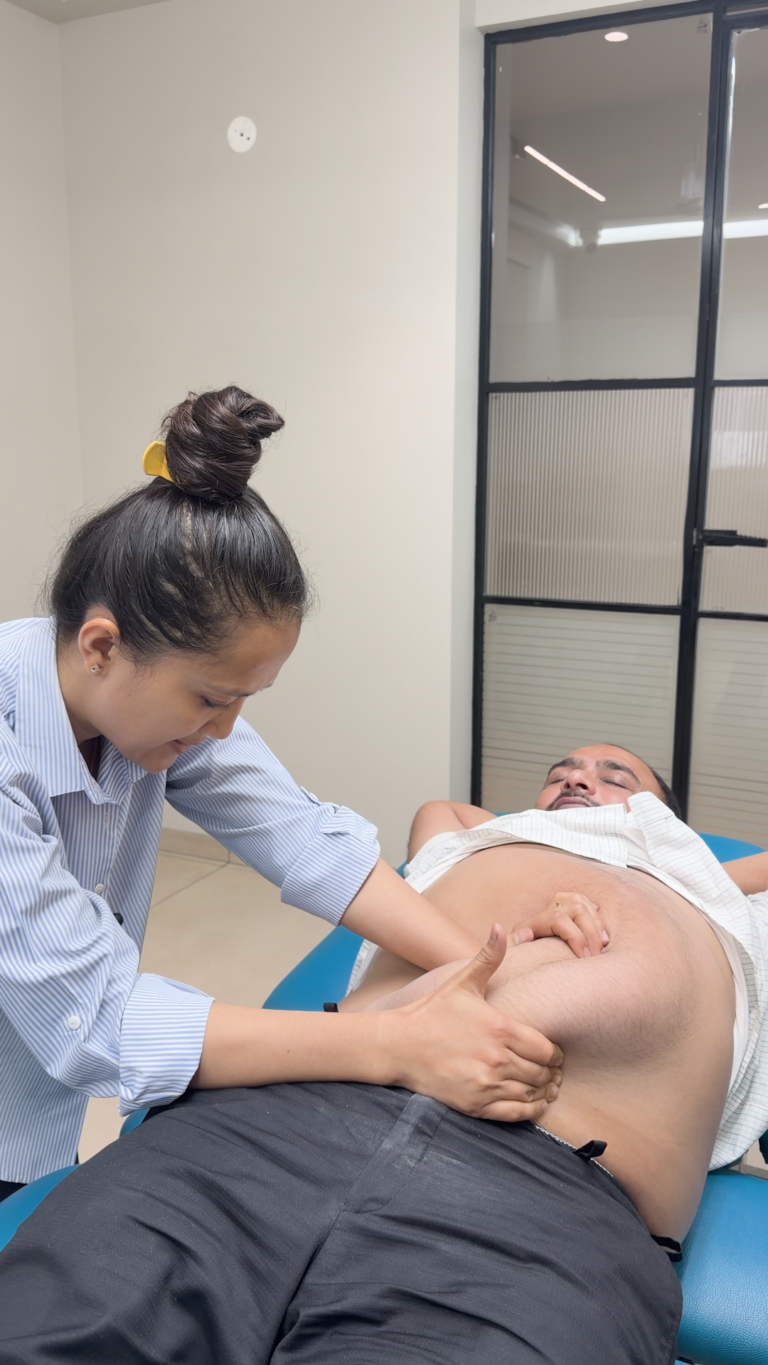
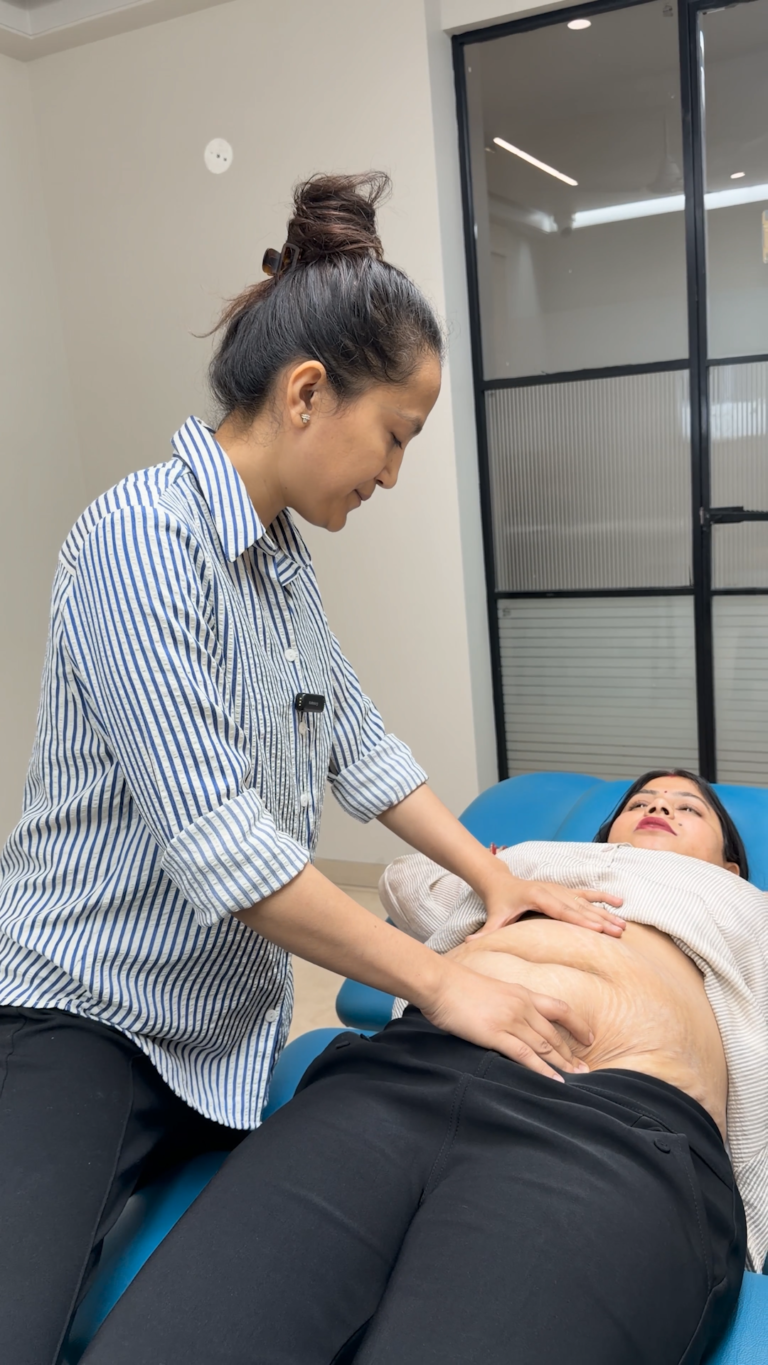
Professional navel displacement treatment doesn’t start with hands-on work—it starts with listening. A good practitioner will take time to understand your history, assess your posture and movement, and figure out why the displacement happened before they do anything else. Treatment usually brings together abdominal massage, core strengthening, breathing work, and postural adjustments.
The difference here is durability. Home care can take the edge off. Professional treatment is aimed at actually correcting the problem and reducing the likelihood it comes back. For people who deal with recurring symptoms, most practitioners suggest anywhere from four to eight sessions.
The honest downsides are access and cost. Good practitioners aren’t always easy to find, and multiple sessions add up. But if your symptoms are persistent or getting worse, the risk of handling it on your own outweighs the inconvenience of professional care.
Professional therapy works best for: recurring cases, chronic symptoms, or any situation where rest and home care haven’t made a real dent.
How to Find a Navel Displacement Centre Near Me
If you’ve ever typed navel displacement centre near me into a search bar and felt lost, you’re not alone. Here’s what to actually look for: a practitioner who assesses you before doing anything, explains the plan clearly, and doesn’t overpromise. Anyone claiming they’ll fix a long-standing issue in one session should raise a flag.
Physiotherapy clinics with a background in abdominal rehab are often a good starting point, as are practitioners with training in traditional healing approaches. Trust your gut—if someone feels rushed or dismissive during your first conversation, look elsewhere.
Navel Setting Near Me — What to Expect and How Long Does Recovery Take?
Booking a navel setting near me session for the first time can feel a bit intimidating. Expect the first appointment to involve more conversation than hands-on work. Your practitioner will want to understand your symptoms, what triggered them, and your general health history. After that, they’ll manually assess where things are before starting any treatment.
Recovery timelines are genuinely variable. A recent, isolated case might resolve in one to three sessions, with noticeable relief within days. Chronic or recurring displacement takes longer—typically four to eight weeks of consistent sessions, with steady progress rather than a dramatic overnight change. Sticking to any home exercises your practitioner recommends between visits tends to speed things along.
The Bottom Line on Navel Displacement Treatment
If your symptoms are mild and recent, starting with home care isn’t unreasonable. But if things keep coming back, or you’re simply not sure what’s going on, getting a professional involved is the safer choice—both for your body and your peace of mind.
If you’re still figuring out where to start, the Navel Displacement website is worth a visit. It covers symptoms, walks through treatment options, and gives a grounded picture of what recovery actually looks like—good reading before you commit to anything.