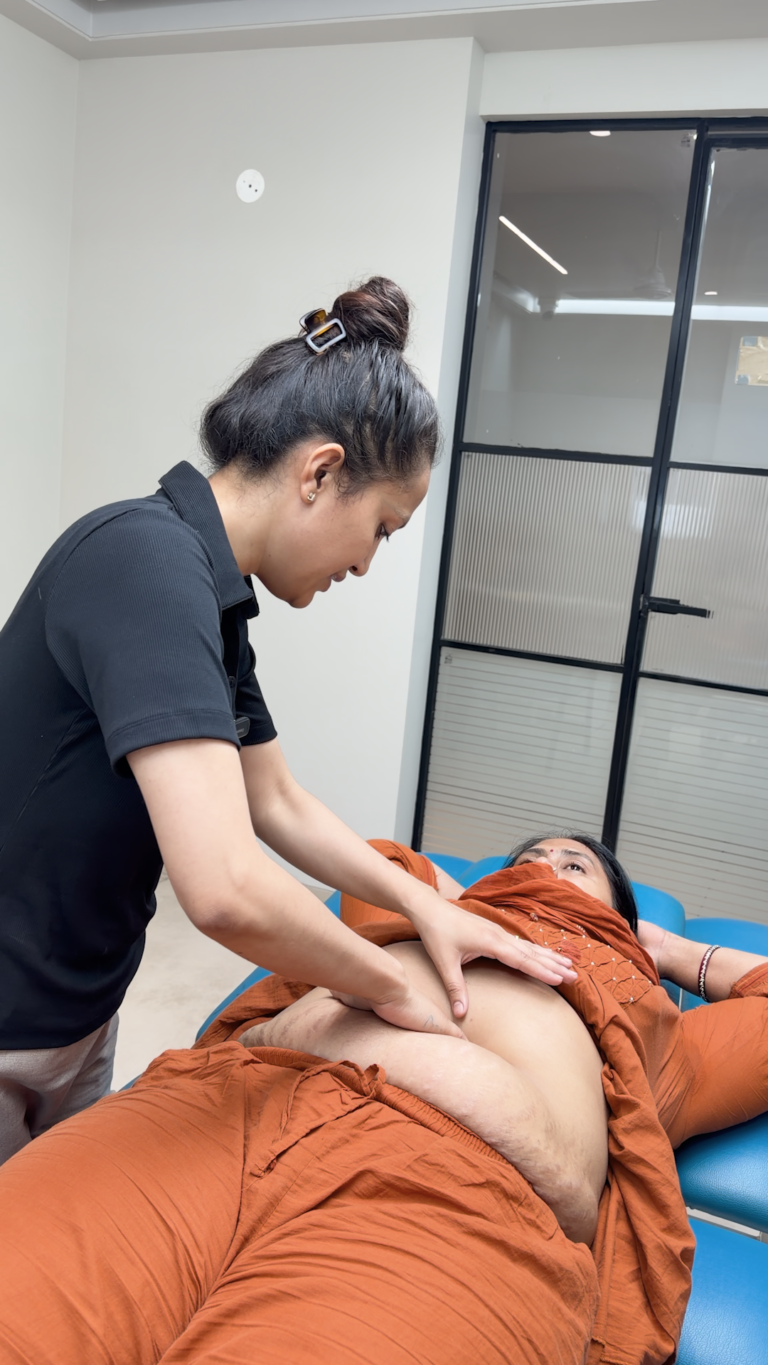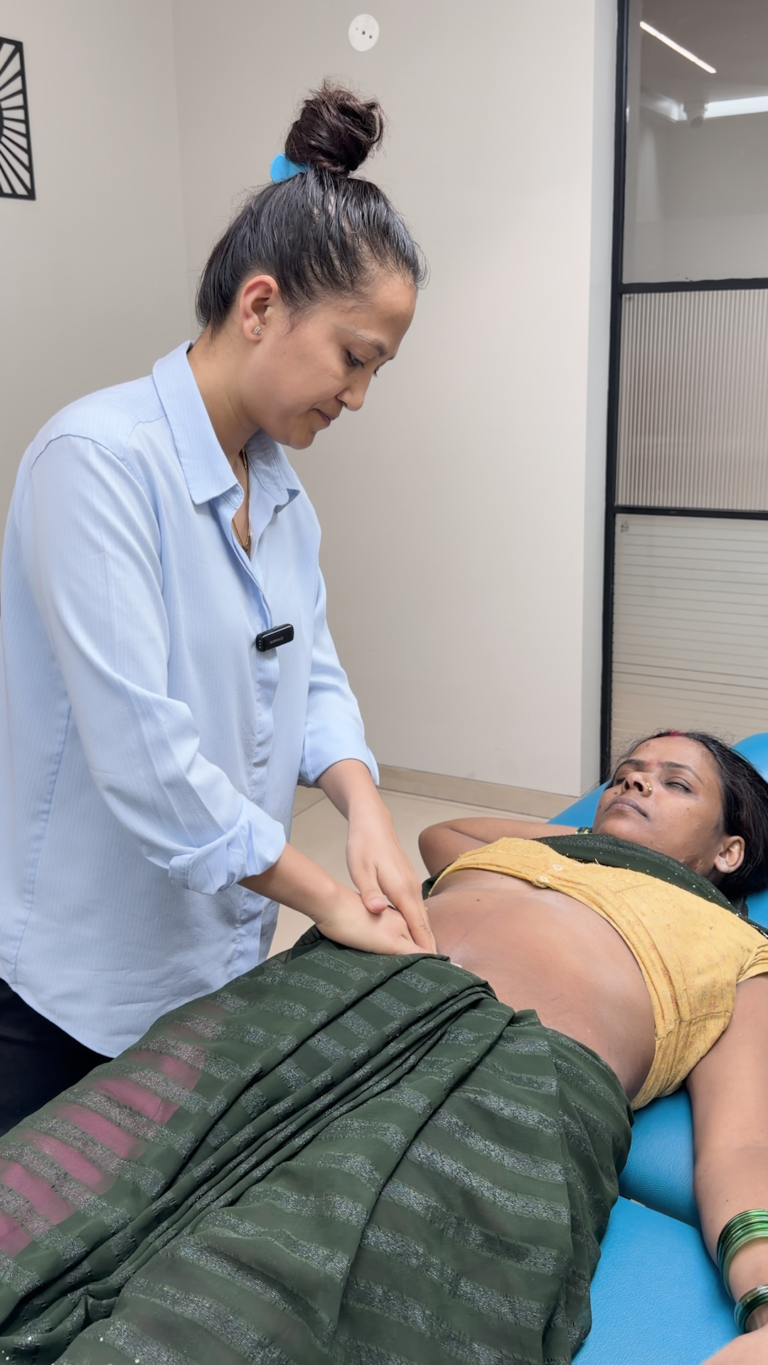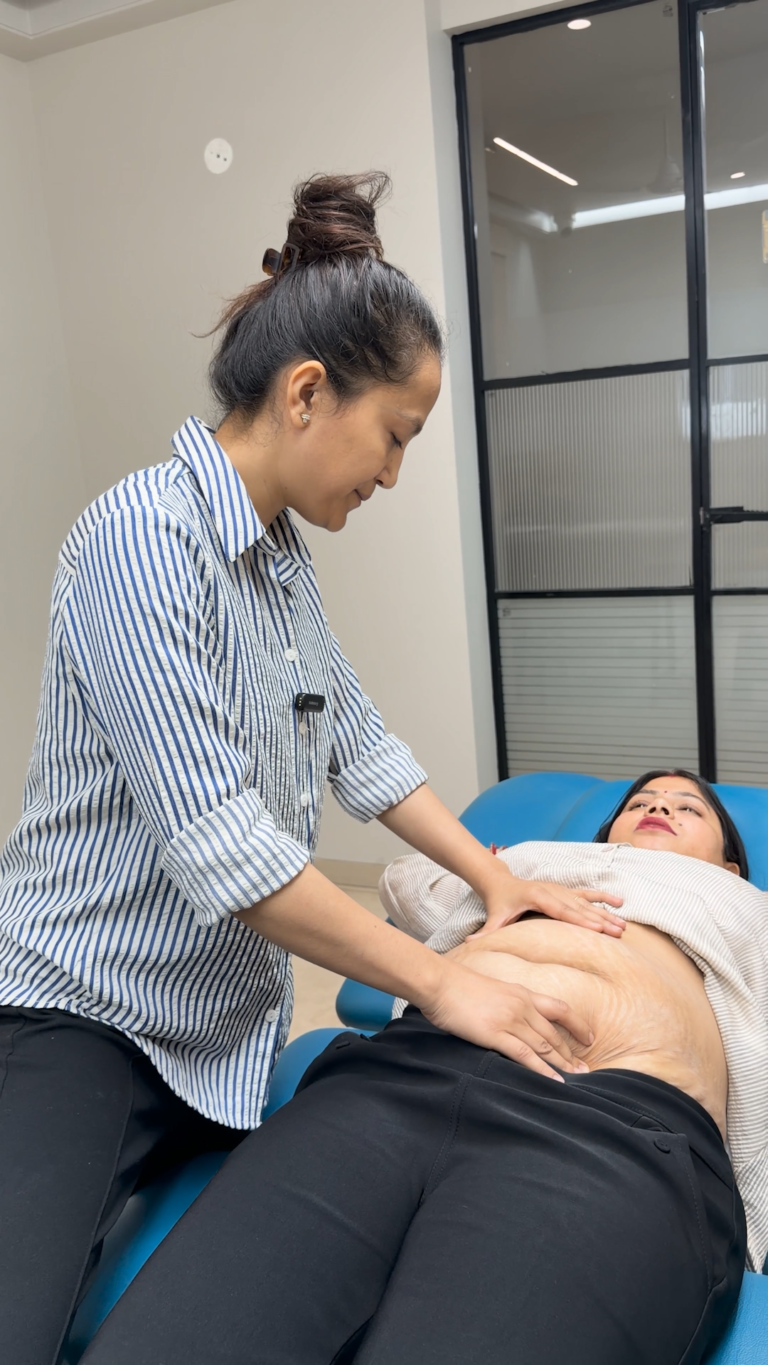
Navel displacement happens when your belly button shifts from its natural midline position — usually because of abdominal muscle strain, an umbilical hernia, pregnancy, or a previous abdominal surgery. You might notice your navel looks off-center, feel a dull ache around your midsection, or deal with unexplained bloating and digestive changes. If you’re looking into navel misalignment treatment Gurgaon, a general surgeon or gastroenterologist can figure out what’s going on and point you in the right direction.
Most people don’t give their belly button a second thought — until something starts to feel off. A slight shift to one side, a nagging ache after a meal, an odd bulge you can’t explain. These things tend to get dismissed as “nothing serious.” Sometimes they’re not. But sometimes they are.
This guide covers what navel displacement actually is, which symptoms are worth acting on, and what’s most likely causing the shift. If you’re already thinking about navel misalignment treatment Gurgaon, you’ll find practical next steps here too.
What Is Navel Displacement? Understanding Belly Button Displacement in Gurgaon
In Ayurvedic and traditional health conversations, navel displacement is often called “nabhi khisakna.” Clinically, it refers to your belly button moving from its normal position on the abdominal wall — roughly centered on a vertical axis aligned with your spine, around the L3–L4 vertebral level.
When the muscles, connective tissue, or surrounding organs come under stress, the navel can shift to one side, pull inward unevenly, or protrude more than it should. A clinician evaluating belly button displacement in Gurgaon will typically start with a hands-on physical exam to work out whether the shift is postural, muscular, or structural — because that distinction changes everything about treatment.
Symptoms Worth Acting On: When to Seek Nabhi Displacement Treatment Gurgaon
Catching this early matters. Patients who get a diagnosis within the first few weeks of noticing symptoms tend to recover faster — muscle-related cases often clear up within 2 to 4 weeks with the right care. Here’s what to look out for when considering nabhi displacement treatment Gurgaon:
- Persistent bloating — Gas and abdominal fullness that doesn’t improve with dietary tweaks or over-the-counter remedies.
- Bowel irregularity — Constipation or unpredictable stool frequency, often tied to shifts in intra-abdominal pressure.
- A firm or soft bulge near the navel — This one needs prompt evaluation. It’s a classic indicator of umbilical hernia and can worsen quickly if left alone.
- Lower back discomfort without an obvious cause — Your core and lumbar spine share a lot of load. When the core is struggling, your back often picks up the slack.
If you’re dealing with two or more of these symptoms at the same time, it’s a reasonable signal to get checked rather than wait and hope things settle on their own.
Causes of Belly Button Displacement in Gurgaon
The cause isn’t just background information — it directly determines how your case gets treated. Here are the most common ones:
- Abdominal muscle strain — Heavy lifting with poor form, an overloaded deadlift session, or an overly aggressive core workout can disrupt the normal tension balance in the muscles anchoring your navel.
- Pregnancy — The significant stretching of the abdominal wall during the second and third trimesters can permanently alter navel position. Postpartum diastasis recti — a separation of the rectus abdominis — affects roughly 1 in 3 women after childbirth.
- Umbilical hernia — A portion of bowel or fat pushes through a weak area in the abdominal wall at or near the navel.
- Rapid weight change — Gaining or losing 10+ kg in a short window changes fascial tension across the abdominal wall unevenly, which can pull the navel off-center.
- Chronic poor posture — Prolonged anterior pelvic tilt — something a lot of desk workers develop after sitting 8+ hours a day — gradually affects core alignment over months and years.
- Post-surgical scar tissue — Adhesions that form after laparoscopic or open abdominal procedures can tug the navel sideways over time.
Each of these has its own clinical picture. Getting the right diagnosis early is what determines whether you’re heading toward a physiotherapy plan or a surgical consultation — and that’s not a small distinction.
Navel Misalignment Treatment Gurgaon: Your Options Explained
There’s no one-size-fits-all fix here. What works depends entirely on what’s causing the displacement in the first place.
For muscle strain or postural imbalance, a structured physiotherapy program — usually 8 to 12 sessions focused on transverse abdominis activation and core stabilization — tends to produce real, measurable results. Practitioners offering navel misalignment treatment Gurgaon sometimes blend traditional abdominal massage techniques with modern rehabilitation approaches, and for certain patients that combination works well.
Hernia cases need a different conversation altogether. A general surgeon will assess whether the hernia is reducible and decide between watchful waiting and laparoscopic repair. Severe pain, nausea, or a hernia that won’t reduce are signs that surgery shouldn’t be delayed.
If your symptoms have been hanging around for more than 2 weeks without any real improvement, that’s your cue to stop waiting and get a professional opinion.
Belly Button Displacement in Gurgaon — Who Should You See?
For belly button displacement in Gurgaon, finding the right specialist really does hinge on what your main symptoms are:
- General physician — The right starting point. A GP can rule out anything urgent and get you to the right specialist without unnecessary detours.
- Gastroenterologist — The appropriate choice when digestive symptoms are taking the lead: chronic bloating, irregular bowel habits, or persistent abdominal fullness.
- General surgeon — Go here if a hernia is suspected. Don’t sit on the referral if you’re noticing a persistent bulge.
- Physiotherapist — A good fit for confirmed postural or muscle-strain cases with no structural damage. If your displacement is pregnancy-related, look for a therapist with specific experience in postpartum core rehabilitation.
When you get a referral, ask your GP directly who they’re sending you to and why. Getting to the right person on the first try can save you two to three weeks of unnecessary back-and-forth.
Nabhi Displacement Treatment Gurgaon — What to Expect at Your Appointment
A typical clinical pathway for nabhi displacement treatment Gurgaon tends to follow this sequence:
- Initial consultation — Your doctor reviews your symptoms, when they started, relevant medical history, and lifestyle factors like your job, recent physical activity changes, or pregnancy history.
- Physical examination — A physical examination of your belly to evaluate navel position, tension of tissue around the navel, and reducibility of any protrusion.
- Diagnostic imaging — Ultrasound is usually the first tool. A CT scan may follow if hernia anatomy or organ involvement needs a closer look.
- Treatment plan — This could range from a home exercise program and dietary adjustments to a scheduled laparoscopic repair, depending on findings.
- Follow-up — Non-surgical cases typically get a review at 3 to 4 weeks. Surgical cases follow standard post-operative monitoring.
If imaging is needed, expect the full workup to take one to two weeks from your first appointment.
Navel Displacement Issues Treatment in Gurgaon — Finding the Right Facility
Gurgaon has a solid secondary and tertiary care network, so finding a facility for navel displacement issues treatment in Gurgaon isn’t the challenge — picking the right one is. When you’re comparing options, look for:
- General surgeons with documented experience in hernia repair and abdominal wall cases
- On-site ultrasound and CT imaging, which can cut diagnostic turnaround from days to hours
- A physiotherapy unit that coordinates with the surgical team, so you don’t lose time starting over with a separate referral
- Clear, upfront cost estimates before any procedure gets scheduled
Patient reviews on Practo or Google can give you a general read on a clinic’s reputation. That said, a direct referral from your treating physician still carries more weight than aggregate star ratings.
Getting Back to Full Function After Navel Displacement Issues Treatment in Gurgaon
For most people, navel displacement doesn’t mean a long or complicated recovery. Muscle-strain cases managed through physiotherapy often resolve within a month. After laparoscopic hernia repair, most patients are back at desk work within 1 to 2 weeks, with full clearance for physical activity usually at the 4 to 6-week mark.
Keep a simple log of your symptoms week by week. If you’re not seeing real improvement — less pain, less bloating, more regular digestion — raise it with your clinician before your next scheduled appointment. Waiting quietly rarely speeds anything up. For more on symptoms, causes, and treatment options, visit the Navel Displacement website.