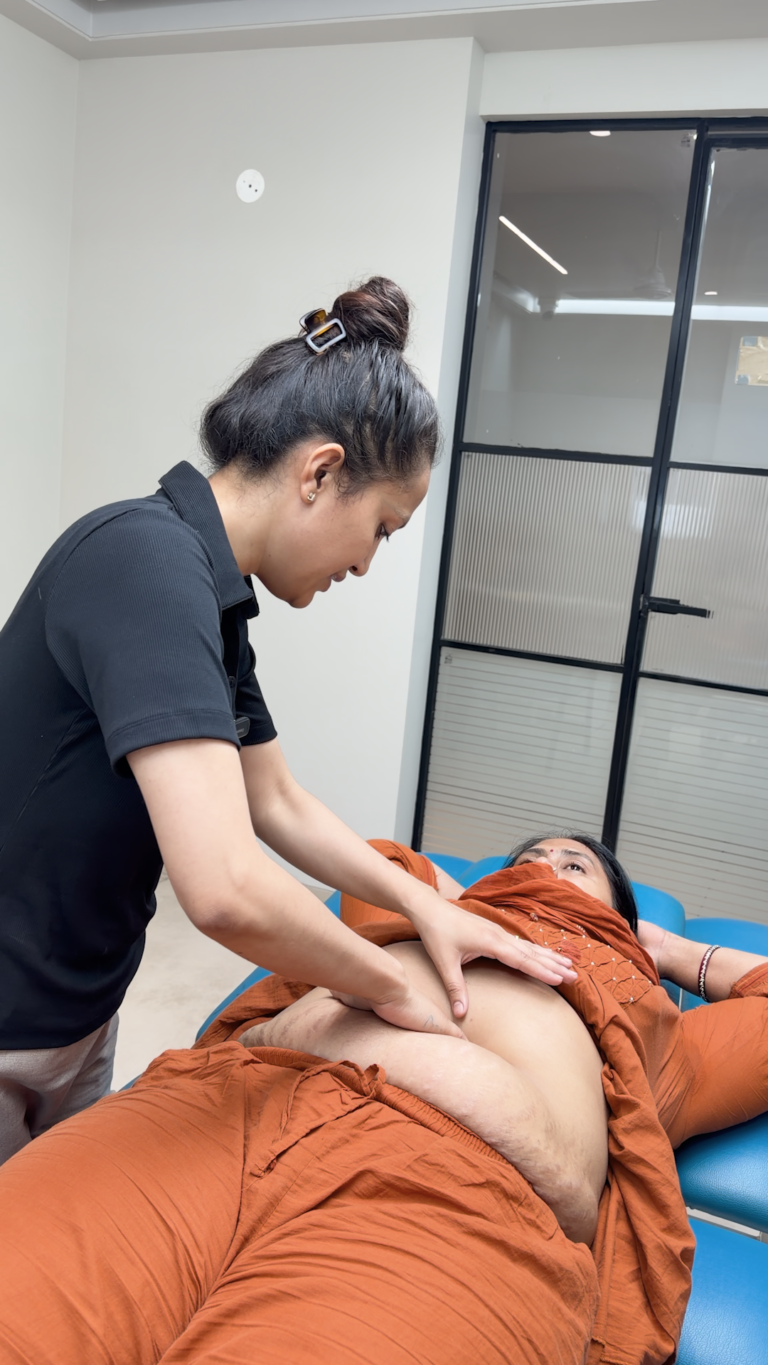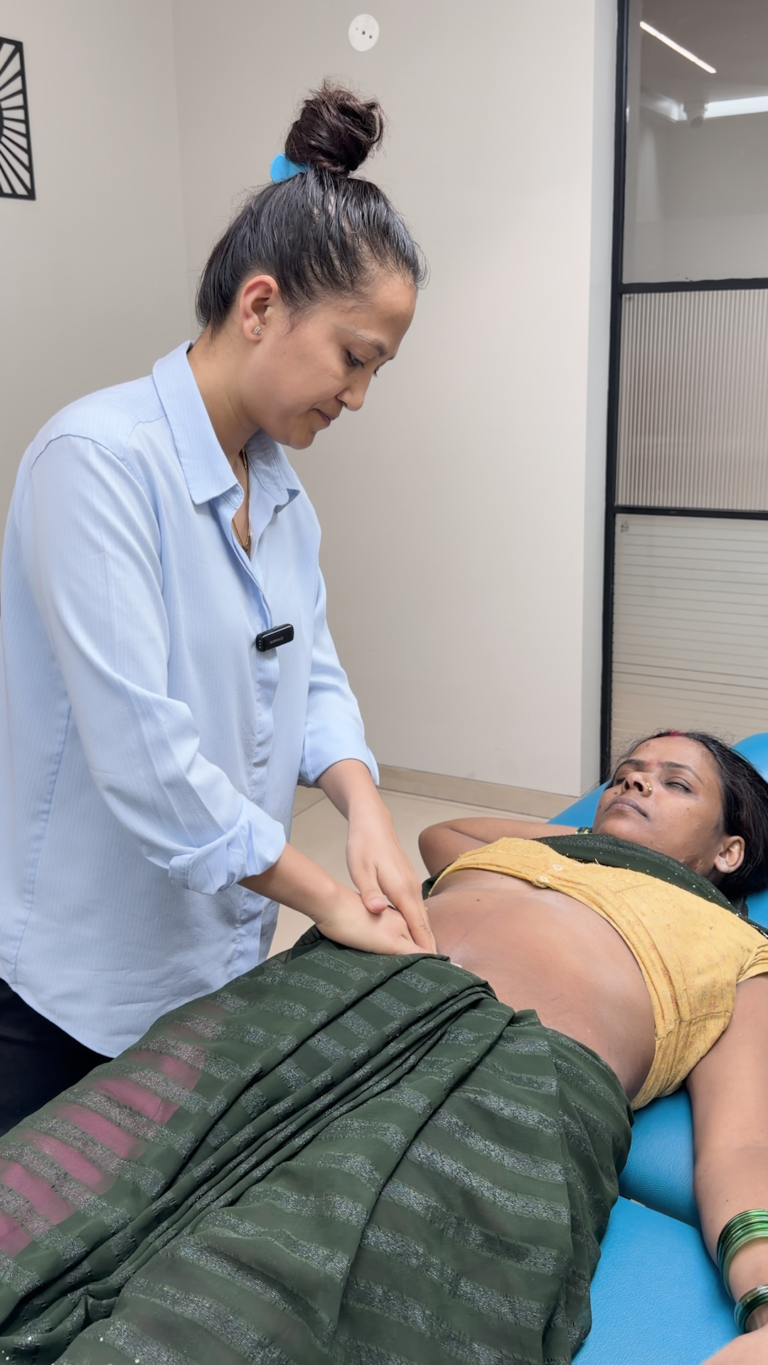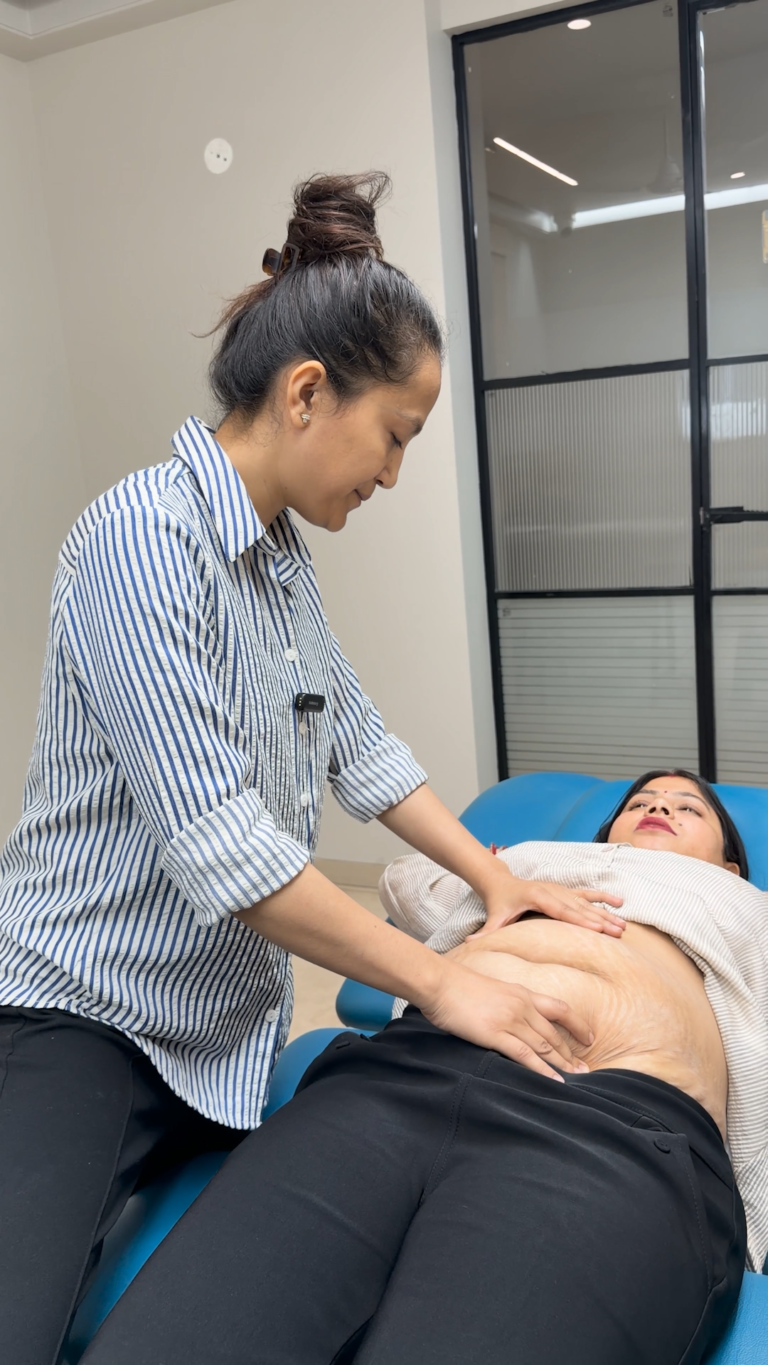
Navel displacement (Nabhi displacement) occurs when the abdominal muscles and connective tissue surrounding your navel move out of their natural position – generally from hard lifting, poor posture or continual digestive strain. It can show up as persistent bloating, a dull lower back ache, or that odd pulling sensation near your belly button. Gentle core work, heat therapy, and — when things aren’t improving — a professional evaluation can help you get back to feeling balanced.
You’ve done the bloodwork. You’ve given up dairy, cut back on caffeine, and worked your way through a shelf of probiotics. Still, the bloating keeps coming back. Your lower back aches in the same familiar spot. Your digestion feels sluggish regardless of how carefully you eat.
You’re not imagining it, and you’re not alone. Standard check-ups are designed to catch serious structural or digestive disease — but they don’t always flag the subtler imbalances happening deeper inside your core.
That’s where navel displacement enters the picture. It’s a concept rooted in traditional body mechanics, and it’s getting fresh attention in physical therapy practice. The idea is that the muscles surrounding your navel have a much bigger influence on everyday comfort than most people — including many clinicians — tend to think.
Here’s what it actually means, how to spot it, and what you can do about it.
What Is Navel Displacement (Nabhi Displacement)?
Conventional medicine tends to treat the abdomen as a fixed structure — organs where they should be, muscles doing their job. Physical therapy and traditional body-mechanics practice take a different view. They consider how the soft tissue around your navel and the periumbilical muscles can shift out of natural alignment, even when the change is barely visible.
Traditionally called Nabhi displacement or Dharan, the concept treats the navel as an anchor point for abdominal tension. When the surrounding muscles pull unevenly — from strain, poor posture, or repetitive movement — that anchor drifts just enough to alter how your core distributes load across the trunk.
You won’t catch it on an imaging scan. You’ll feel it as that persistent, hard-to-place discomfort that shows up every single day without a clear explanation.
Common Signs of Navel Displacement: Is Your Core Off-Balance?
Navel displacement rarely shows up as one obvious symptom. More often, it’s a cluster of smaller complaints that each feel manageable on their own — until they’ve been around long enough to become exhausting.
- Digestive distress — frequent bloating, excess gas, or appetite shifts that don’t track with what you’re eating
- A dull lower back ache or a pulling sensation around the abdomen, especially after bending, twisting, or any sudden movement through the trunk
- General fatigue paired with a sense that your body just won’t settle into a comfortable posture — something patients often struggle to describe in words
Because these symptoms overlap with so many other conditions, navel displacement gets missed. People cycle through gastroenterologists, chiropractors, and dietitians for months before anyone considers the core muscle connection.
Why Does Navel Displacement Happen? Common Triggers
Your core handles more mechanical stress than most people realize. A few common patterns push the abdominal muscles out of balance — often gradually, without any single dramatic injury moment.
Physical Strain and Navel Displacement
One awkward lift — groceries from the car boot, a box pulled down from a high shelf — can place uneven pressure directly on the muscles around your navel. Repeat that with poor form over weeks at the gym, and the effect compounds quietly.
Lifestyle Factors That Cause Core Misalignment
Hours at a desk each day weakens core muscles over time, especially without active posture support. Chronic stress also contributes. It puts the abdominal wall in a low grade state of tension that steadily pushes tissue away from its natural resting posture.
Digestive Stress and Abdominal Displacement
Chronic constipation or recurring gas buildup creates sustained internal pressure against the abdominal walls. That pressure radiates outward and contributes to the same muscular tension patterns associated with navel displacement.
Safe, Natural Navel Displacement Relief: What You Can Do
For many people, gentle and consistent self-care makes a real difference. Start here before moving to clinical intervention.
- Apply gentle heat. A warm compress on your abdomen for 10–15 minutes can relax tense muscular tissue and ease the pulling sensation near the navel.
- Try a gentle oil massage. Light, circular pressure around the navel area using warm oil may help release built-up tension in the surrounding muscles — often most effective in the evening when your body has had time to wind down.
- Build core stability gradually. Pelvic tilts and deep breathing exercises are good entry points. They strengthen the muscles that support your posture without adding compressive load to already strained tissue.
- Check your sitting posture. A lumbar cushion or a simple chair height adjustment can reduce the ongoing strain that feeds misalignment across a long workday.
These steps won’t resolve everything — but they address the mechanical inputs that cause navel displacement in the first place, which is where lasting improvement tends to begin.
When Should You See a Specialist for Navel Displacement?
Sharp pain, symptoms that worsen over several days, or discomfort that doesn’t shift after two to three weeks of steady home care — those are your cues to get a professional, non-invasive evaluation. Persistent abdominal pressure can occasionally indicate structural problems like hernias, which need clinical assessment to rule out. A qualified specialist can also confirm whether core imbalance is genuinely driving your symptoms, or whether something else deserves attention.
Finding Lasting Core Balance: Professional Care for Navel Displacement
Home care has a ceiling. When bloating, abdominal tension, and back discomfort persist despite consistent self-management, a more structured approach tends to produce better and longer-lasting results. Restoring abdominal muscle alignment means looking at posture, muscle load, and digestive health together — not as separate complaints handled one at a time.
For those looking for professional, non-invasive assessment of ongoing alignment or gut discomfort, focused care is available at Navel Displacement. Dr Ranjana Lunthi leads consultations and specialised manual therapies, with an approach focused on restoring core balance and real, everyday comfort.
Frequently Asked Questions
1. Is navel displacement a recognized medical diagnosis?
Navel displacement comes from traditional body-mechanics observation rather than a formal clinical diagnosis, though its core premise — that abdominal muscle imbalance affects posture and digestion — aligns with established physical therapy principles.
2. How quickly does self-care work?
Everyone experiences the effects differently, however many people feel less tense in 2-4 weeks of frequent heat therapy and simple core exercises.
3. Does back pain come from navel displacement?
Yes, uneven tension in the abdominal muscles can strain adjacent structures, causing dull pain in the lower back, but persistent pain should always be adequately evaluated.
4. Is it risky to try home remedies to treat navel dislocation first?
Mild pain can be treated relatively safely with warmth, massage and core strengthening, but if the pain is intense, intensifying or not going away, it’s time to see someone.
5. Who should consider getting a navel displacement checked by a specialist?
Anyone with chronic bloating, persistent lower back discomfort, or pulling feelings in the stomach that are not improving with simple self-care would benefit from a non-invasive professional assessment.